(0, 0, 0) A System for Recalibration
Student: Rose Chan
Professors: Andrea Macruz + Manali Truitt * MFA Director: Christine Facella
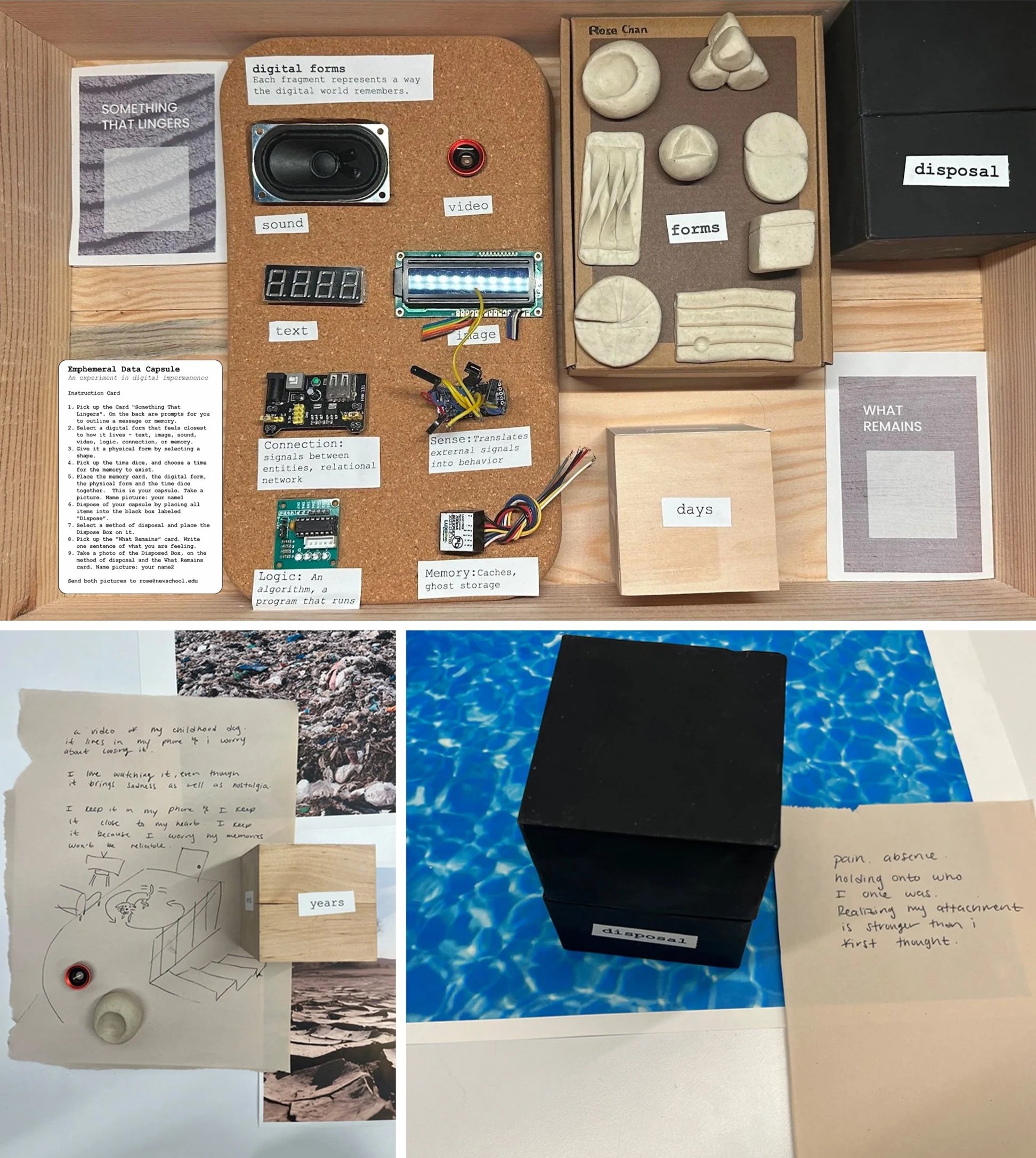
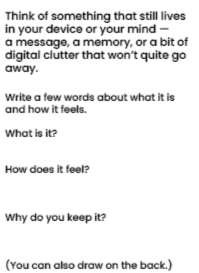
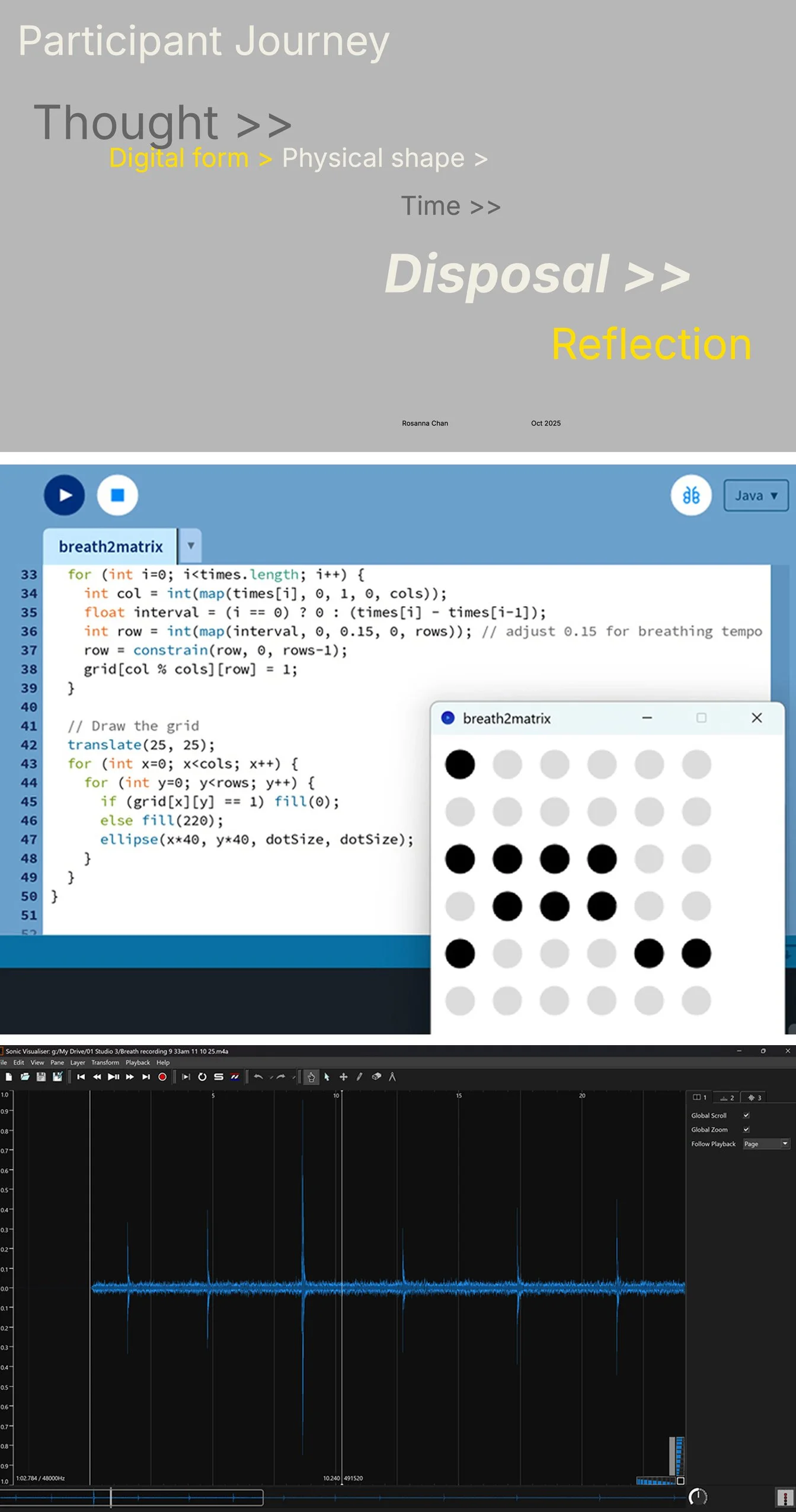
The iterative process began with a cultural probe called the “Ephemeral Data Capsule,” designed by the student Rose Chan, which investigates how people relate to digital memories and whether making them physical and temporary could change that relationship. Participants moved through the lifecycle of a digital trace, from encoding a thought to designing its disappearance. The probe presented eight participants with a kit in which they selected a digital memory, gave it a physical form from material options, assigned it a timeframe using a wooden dice, disposed of it in a labeled box, and reflected on what remained. It asked whether giving physical form and a temporal boundary to a digital memory could change how participants experienced letting it go. Participant responses revealed unexpected emotional depth: one described a childhood video they keep despite the sadness it brings, noting they worry their memories will not be reliable without it; another reflected on pain, absence, and holding onto who they once were, realizing their attachment was stronger than they had first thought. These responses pointed to a fundamental problem: the accumulation of memory, both in a physical sense, such as data storage, and in an emotional and cognitive sense. The first insight continues to inform ongoing work on designing ephemeral data capsules using biomaterials, mirroring the brain's processes of forgetting. The second, that participants needed physiological regulation rather than digital impermanence, shifted the design focus toward allostasis and informed the final proposal. Bellow it is possible to design probe kit and Participant 03's response, showing how the physical projection and disposal of a memory revealed its emotional and cognitive weight.
Images: Design probe kit and Participant 03's response, showing how the physical projection and disposal of a memory revealed its emotional and cognitive weight.



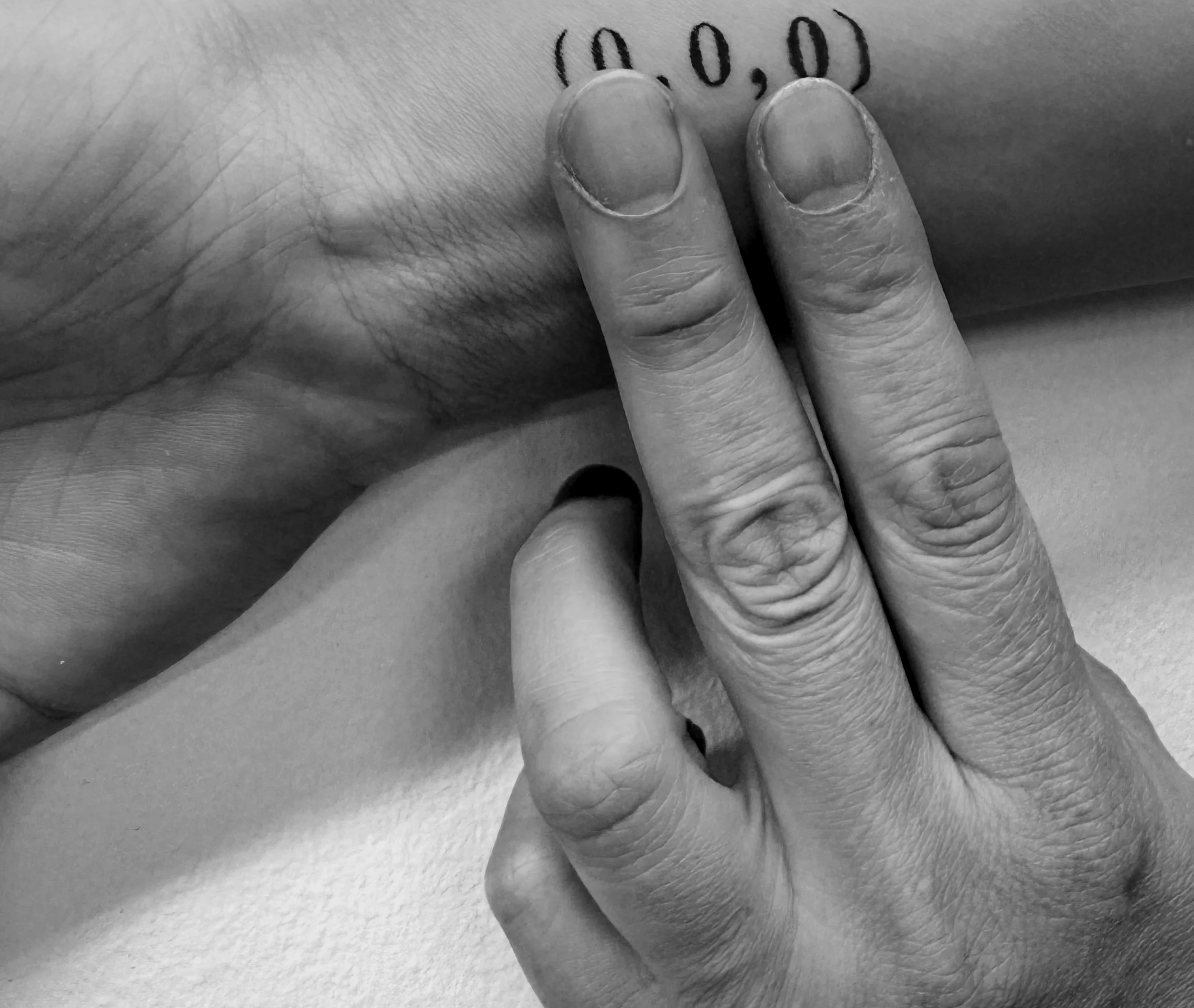
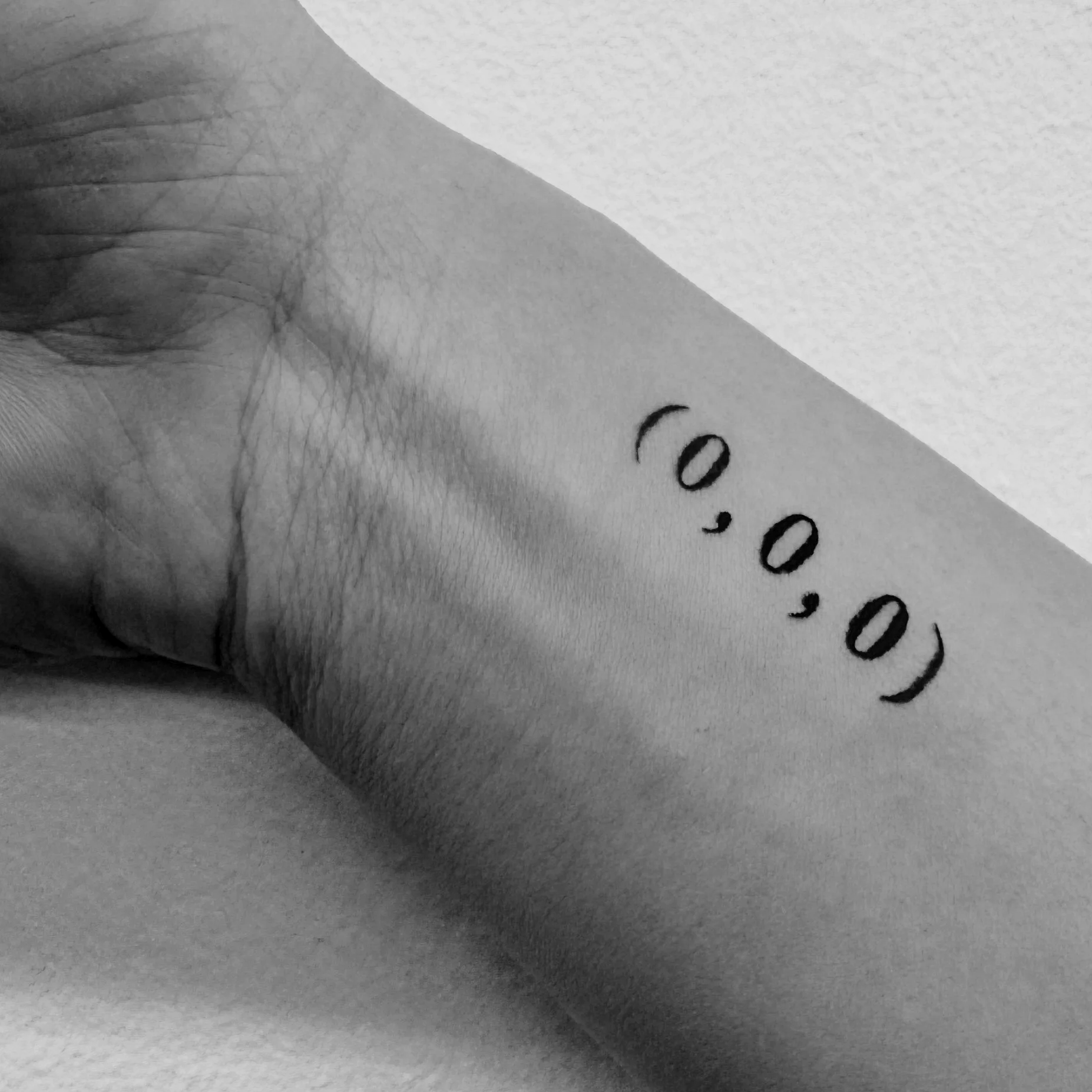
Responding to this finding through predictive processing, foregrounding Peter Sterling's concept of allostasis, the project proposed that rather than designing an external wearable, the body itself could function as the technology, leveraging its own regulatory processes toward well-being. A simple action, touching a symbol at a specific point on the forearm while attending to the breath, established a feedback loop that engaged endogenous regulatory mechanisms and potentially calmed the nervous system without the need for external technological intervention. In parallel to digital fabrication workflows, where (0,0,0) defines a reset origin in CNC and 3D printing systems, the project proposed an equivalent reset condition for the human body, utilizing endogenous physiological responses.
The design was structured around two components: a user experience that associated a personalized symbol with resetting, and a physical artifact that enabled this symbol to be embodied on the body. The aim was to generate a unique pattern that users could identify with personally. While pathways to resetting often emerged through reflection, meditation, or therapeutic insight, the symbol reflected cognitive and physiological work already undertaken rather than substituting for it. The system began by focusing on breath as a shared yet individually variable physiological marker.
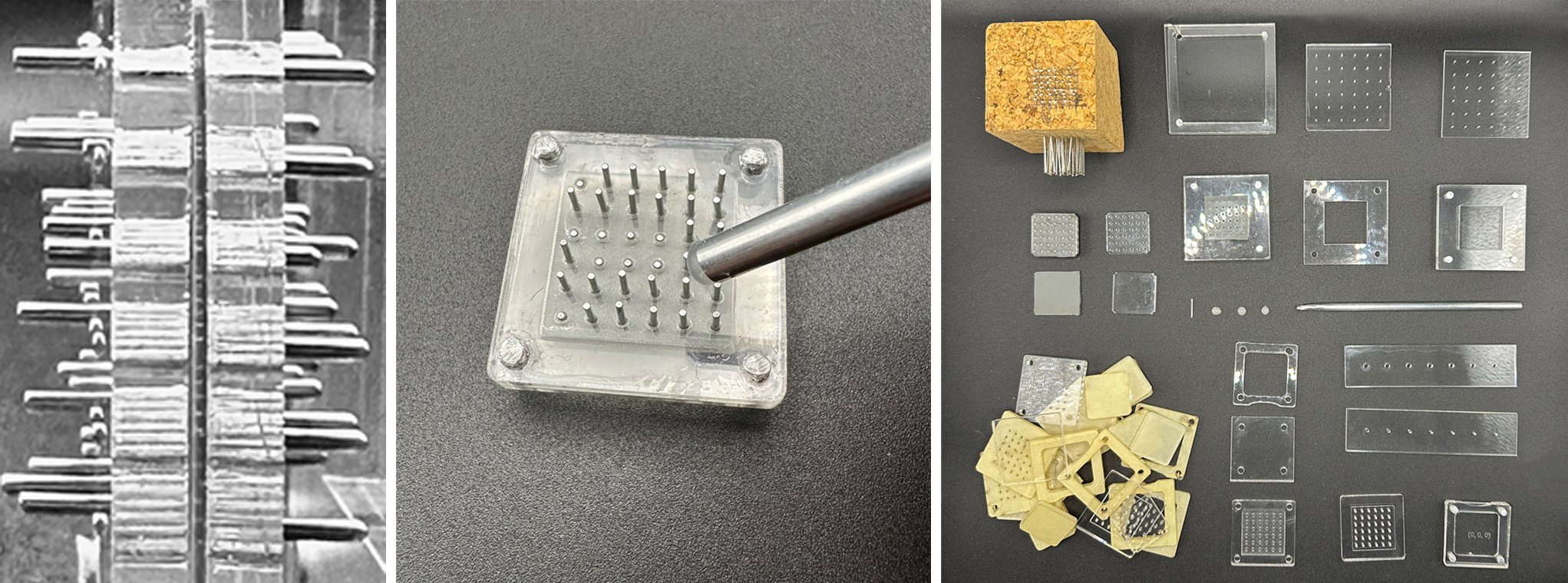
The computational process unfolded in three stages. First, users recorded their breath as an audio file using a smartphone, marking each breath cycle through tapping. Second, the recording was processed in Sonic Visualizer to extract temporal intervals between breath events. Third, these intervals were translated in Processing into a 6 × 6 binary dot matrix design, calibrated to the dataset of a standard recording session and scaled to fit the forearm’s pulse point. The result yielded a personalized respiratory-derived pattern.
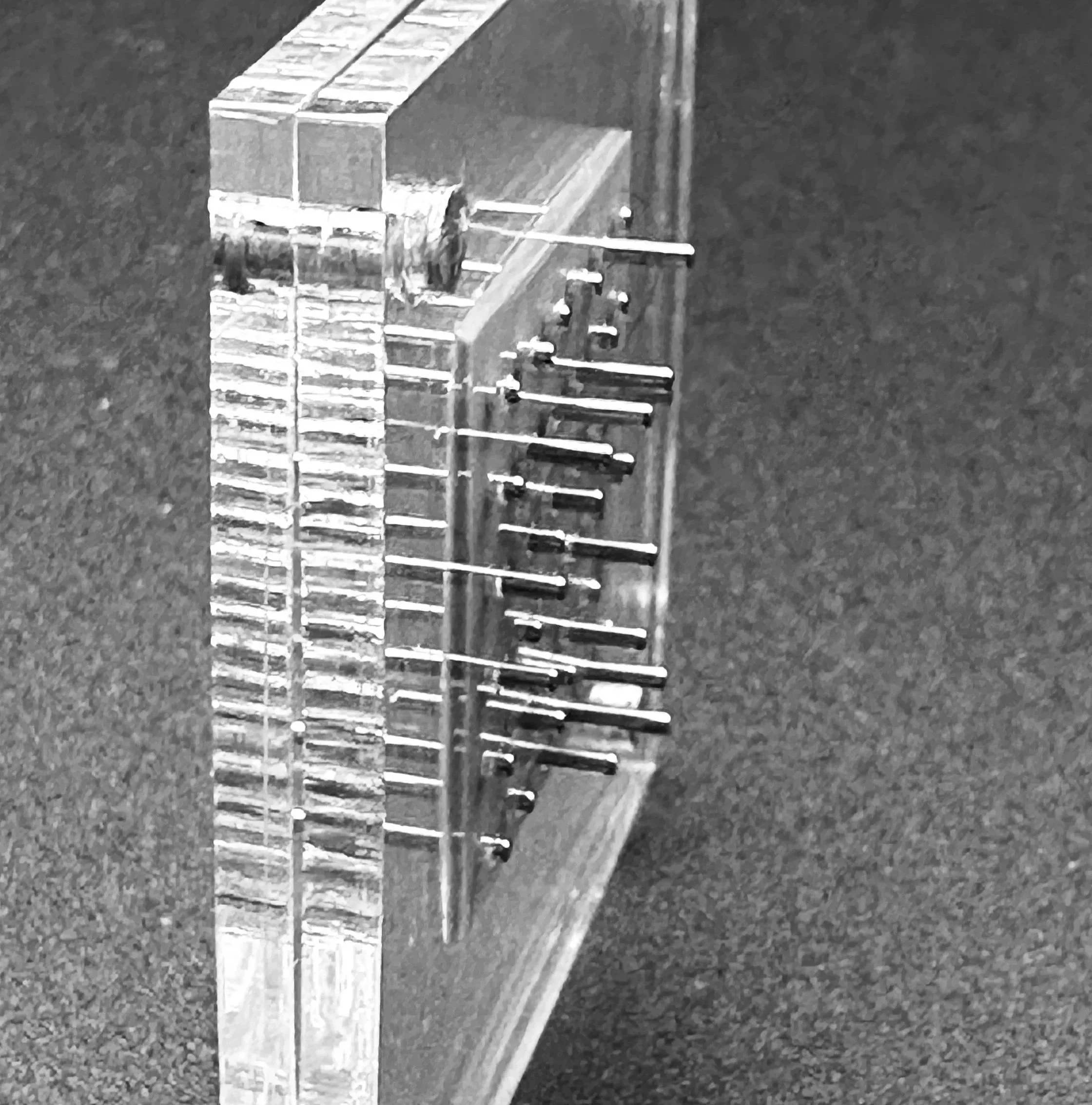
The physical artifact was a laser-cut acrylic pin stamp consisting of two acrylic layers with steel pins aligned to the active dot positions generated through the computational process. Applied to the pulse point using henna, jagua, or alcohol ink, it transferred the pattern onto the skin, producing a bodily inscription of the generated symbol. The object package included the stamp, three ink options, a stylus, and a protective case, requiring no adhesives, fully disassemble, and generating no electronic waste. In this way the project used physiological rhythm to drive a design process that operationalized allostasis through a personalized skin-applied mark rather than treating it as a conceptual reference.
Images: Sonic visualize showing temporal intervals between breath and 6 × 6 binary dot matrix design generated in Processing
6 × 6 binary dot matrix design generated in Processing and subsequently applied to the device using a stylus, alongside the components used for prototyping
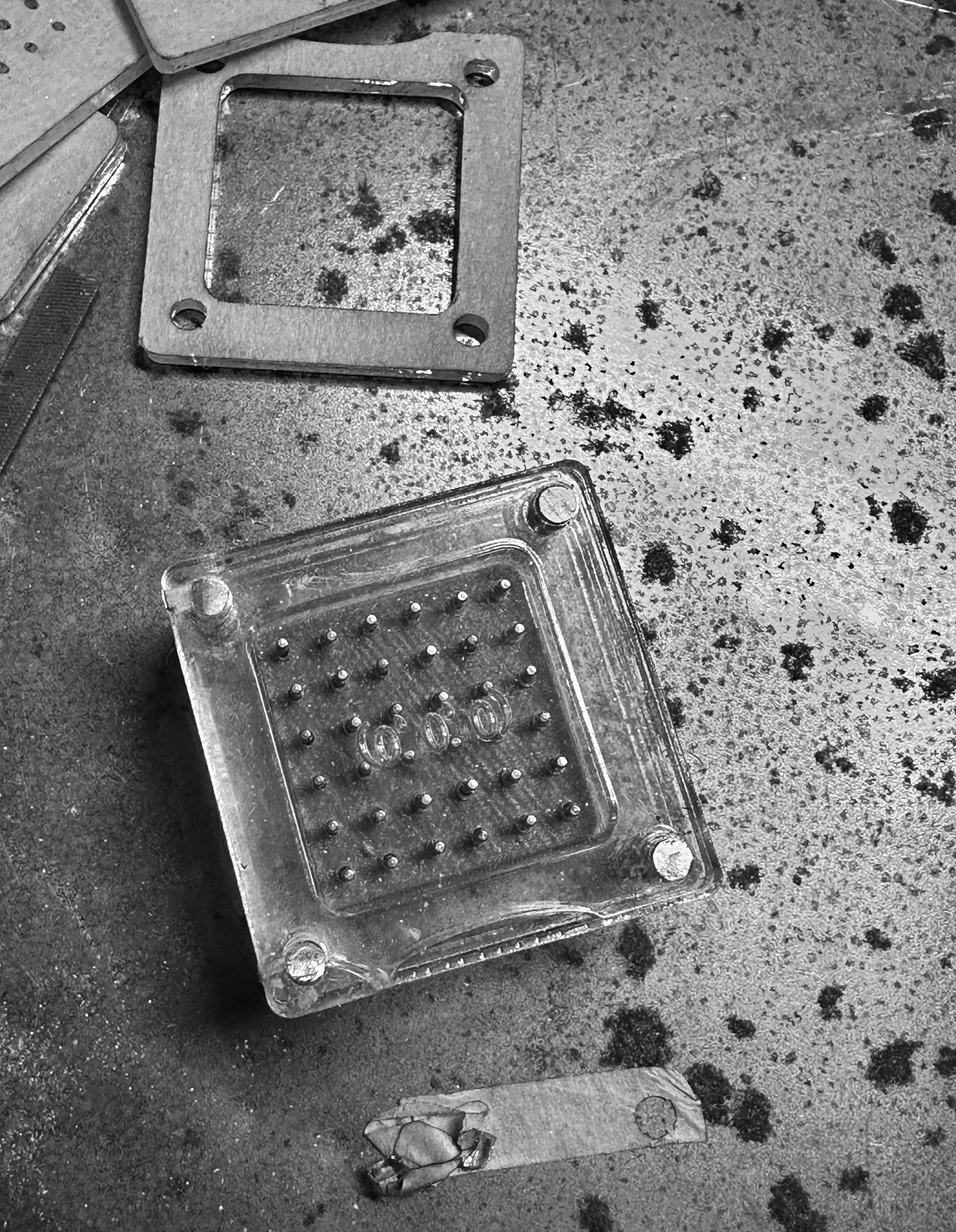
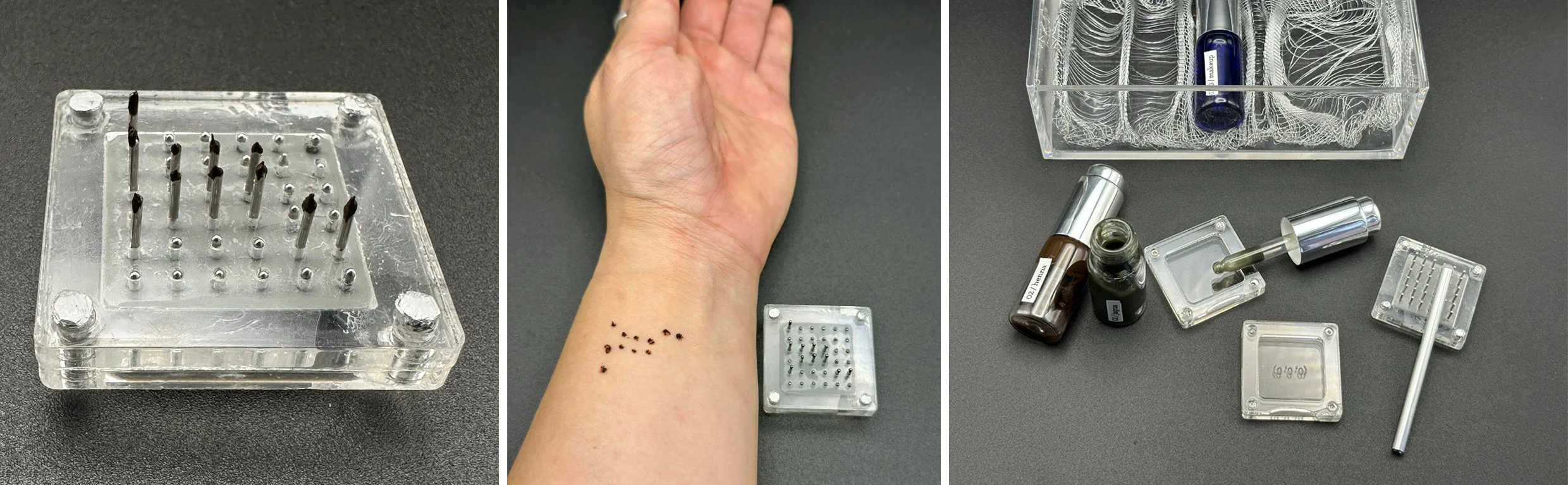
6 × 6 binary dot matrix design applied using ink and transferred onto the skin, alongside the final kit including inks.